
Your GMC Dashboard Lights Guide
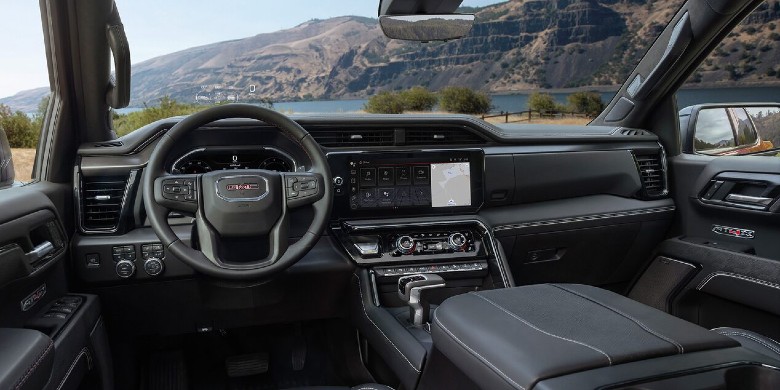
GMC Dashboard Lights Guide
What Every Warning Light Means
KEY TAKEAWAYS
Green or blue
SYSTEM ACTIVE
Amber
ATTENTION SOON
Red
STOP AND CHECK

What Do GMC Dashboard Lights Mean?
A light pops up on the dash, and suddenly the drive feels a little less relaxing. It happens to every GMC owner sooner or later, and the good news is that most dashboard lights are easier to figure out than they look once someone walks through what each one actually means. Here’s a rundown of the lights John Holt GMC customers in Chickasha ask about most, along with a quick way to tell whether a fix is easy or needs attention right away.
What Do the Colors, Solid Lights, and Flashing Lights Mean?
Before getting into each individual light, it helps to know the basic language every GMC dash speaks. Color and behavior tell drivers almost as much as the car light symbols themselves.
Green and blue lights just confirm a feature is turned on, think high beams or adaptive cruise. Amber lights are the dashboard’s way of saying a system needs a look, and red lights mean something more serious is going on. Whether a light stays solid or flashes adds another layer: solid usually means the issue is present but stable, while flashing means it’s active and worth addressing sooner rather than later.
Dashboard Light Color Meanings
Critical Red Warning Lights: Stop Immediately
Red warning lights indicate immediate danger or serious problems that require stopping the vehicle as soon as safely possible. Ignoring these can lead to severe vehicle damage or safety hazards.

Oil Pressure/Oil Level Warning
This light means the engine isn’t getting the oil pressure it needs to protect its moving parts. It’s one of the few dashboard warnings that calls for pulling over immediately. Running an engine low on oil pressure for even a few minutes can cause real damage. Pull over safely, shut off the engine, and check your oil level. If it’s low, add oil. If not, get professional help.

Coolant Temperature Warning
This warns that the engine is running hotter than it should. If it comes on, the safest move is to pull over, let things cool down, and avoid continuing to drive. Overheating can warp an engine in a hurry. Plan to have your vehicle towed to our service center for diagnosis and repair if the light stays on.

Brake System Warning Light
This can mean anything from the parking brake being engaged to low brake fluid or worn pads. If it stays on after the parking brake is released, it’s time to have the brake system inspected before the next drive. Pull over as soon as safely possible and stop carefully. Your vehicle speed may be limited.
Important Yellow/Orange Warning Lights: Get Checked Soon
Yellow or orange lights mean caution. Schedule service soon. While not immediately dangerous, ignoring these warnings can lead to more serious problems and expensive repairs down the road.

Check Engine Light
This one covers a lot of ground, anything from a loose gas cap to a misfiring cylinder can trigger it. A steady light means it’s worth a diagnostic scan soon. A flashing check engine light means stop driving and get it looked at right away, since it usually points to an active misfire that can damage the catalytic converter.

Battery/Charging System Light
Shaped like a battery, this light shows up when the charging system isn’t keeping the battery topped off, often a failing alternator or a loose belt. The vehicle can usually keep running for a while, but it’s running on borrowed time until it’s checked. Continuing to drive with this warning active can drain your vehicle’s 12-volt battery.

Tire Pressure Monitoring System (TPMS) Light
This one lights up when a tire is significantly under- or over-inflated. A quick check with a tire gauge often solves the problem, but a light that keeps coming back can indicate a slow leak worth having a technician track down. Proper tire inflation is crucial for fuel efficiency, handling, tire lifespan, and safety.
Safety System Warning Lights

ABS Warning Light
The anti-lock braking system helps keep the vehicle stable during hard stops. Regular braking still works if this light comes on, but ABS won’t kick in when it’s needed most, so it shouldn’t wait long for a look.

Traction or Stability Control Light
This shows up when the system detects the tires losing grip and steps in to help keep the vehicle steady, especially in rain or snow. A light that occasionally flickers on slick roads is normal. One that stays on all the time indicates a system that needs service.

Automatic Emergency Braking (AEB) Disabled Light
This means the system that can apply the brakes automatically to help avoid a collision is temporarily offline, often because a sensor is blocked by dirt, ice, or snow. If it stays on after a thorough cleaning, a service check can confirm that the sensor itself is working properly.
Driver Assist Indicators: Informational, Not Warnings

Forward Collision Alert Vehicle Ahead Indicator
This indicator simply lets the driver know the system has detected a vehicle ahead and is monitoring following distance. It’s informational, not a warning. No service needed unless the alerts stop showing up when they should.

Pedestrian Ahead Indicator
Similar idea, different target. This lights up when the system spots a pedestrian near the vehicle’s path. It’s part of the same camera and sensor network as the forward collision system, so if it seems to be missing obvious pedestrians, that’s worth mentioning at a service visit.

Super Cruise Light
This indicator shows the status of GMC’s hands-free driving system, typically via a color change indicating when it’s available, active, or requesting the driver to take back control. It relies on a strong GPS signal and clear lane markings, so it won’t always be available on every road.

Driver Attention Assist Light
This one watches for signs of drowsy or distracted driving, such as drifting within the lane, and suggests a break when it detects those patterns. It’s a good nudge to take seriously. A quick coffee stop is a lot cheaper than the alternative.
Know What Your Dash Is Telling You
None of this means a driver needs to become a mechanic overnight. It just helps to know what’s normal, what’s worth watching, and what calls for a stop. Understanding dashboard light meanings takes a lot of the guesswork and worry out of driving, and John Holt GMC in Chickasha is always around to help sort out anything that doesn’t clear up on its own.
If a light has been on for a few days, keeps coming back, or just doesn’t seem right, scheduling a quick check at John Holt GMC is an easy next step. Our service team can run a full diagnostic, explain exactly what’s going on, and get it handled before it turns into a bigger repair.
GMC Dashboard Lights Frequently Asked Questions
Why does my GMC’s dashboard light turn on and then off again?
It’s often a loose gas cap, a brief sensor hiccup, or a system resetting itself after a repair. If it doesn’t come back, there’s usually nothing to worry about.
Is it safe to keep driving with a warning light on?
It depends on the light. Amber lights related to tire pressure or emissions are usually fine for a short drive to the dealership, but red lights, especially oil pressure or brakes, mean it’s best to stop driving and have the vehicle checked.
What’s the difference between car warning lights and driver-assist indicators?
Warning lights, such as the check engine or brake light, indicate an actual issue with the vehicle. Driver-assist indicators, like Forward Collision Alert, are more like status updates letting the driver know a car symbol feature is active and working as intended.
Can a bad battery cause multiple lights to come on at once?
Yes. A weak or failing battery can cause voltage drops that trigger several warning lights simultaneously, even ones unrelated to the charging system itself. It’s a good reason not to ignore that battery symbol.
How can I find out what a specific light on my GMC means?
The owner’s manual has a full breakdown of GMC dashboard symbols and meanings specific to the model and year. For anything unclear, or if a light just won’t go away, our service team at John Holt GMC can pull up the exact car dashboard symbols and meanings for that vehicle and run a diagnostic on the spot.
Do all GMC models use the same dashboard symbols?
Most core warning lights are standardized across GMC’s lineup, but newer driver-assist features like Super Cruise or Driver Attention Assist show up mainly on select trims and model years. Checking the owner’s manual is still the best way to match car dash symbols to the exact vehicle in the driveway.
Questions About a Dashboard Light? Stop By John Holt GMC.
Dashboard light meanings and recommended actions are based on general GMC vehicle information and may vary by model and year. Always consult your owner’s manual for specific guidance. Service and diagnostic availability subject to appointment.